Sleep Comfort & Bedding
Latex Layers Explained: How Natural Latex Changes the Feel of a Bed
A latex layer can make a mattress feel softer, more responsive, or more supportive without replacing the entire bed. The difference comes down to the details: thickness, firmness, latex type, and how the layer interacts with everything beneath it.
Understanding those details can help you make a more confident choice—whether you are adjusting a mattress that feels too firm, building a customizable sleep system, or simply curious about what natural latex brings to a bed.
What a latex layer actually does
A mattress is a system of materials working together. The support core carries most of the load, while the upper layers influence how the surface feels as you lie down. A latex layer may be built into a mattress, added as a topper, or arranged as one component in a modular design. In each case, it changes the contact between your body and the firmer structure below.
Latex is known for its buoyant, springy response. Instead of slowly forming a deep impression around the body, it tends to compress under pressure and push back as you move. That sensation is often described as lifted or gently cradled: there is give at the shoulders and hips, but the surface can still feel lively rather than deeply enveloping.
The result is not identical for everyone. A side sleeper may experience a soft upper layer as welcome cushioning around pressure points, while a stomach sleeper may prefer a firmer, thinner arrangement that resists excess sink. Body shape, sleep position, personal preference, and the mattress underneath all influence the outcome.
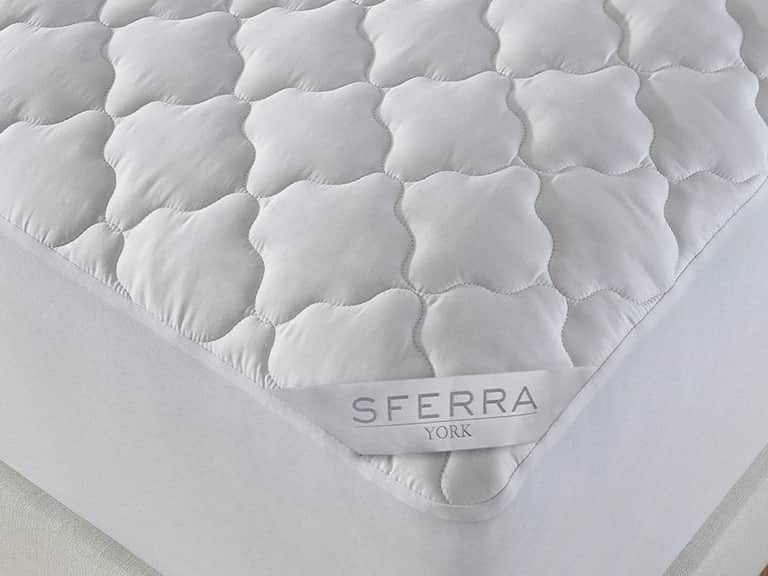
It also helps to distinguish a comfort layer from a protector or a thin mattress pad. A latex topper is substantial enough to alter cushioning and pressure distribution. A fabric pad generally adds a smaller amount of surface softness or protection. Neither replaces a mattress support core, and neither can reliably correct a mattress that is sagging or structurally worn.
Natural latex: material, feel, and expectations
Natural latex is made from rubber tree sap that is processed into foam. The phrase “natural latex” describes a source, but it does not tell you every detail about a finished layer. Manufacturing methods, formulation, firmness, density, and the way the material is assembled can all affect how it feels and performs.
In bedding, two commonly discussed manufacturing approaches are Dunlop and Talalay. These are not simple quality rankings. They refer to different processes, and the final feel depends on the specific product as well as its firmness and construction. Dunlop latex is often described as having a more substantial or grounded feel. Talalay latex is often described as lighter and more buoyant. Those descriptions are useful starting points, not guarantees: a soft Dunlop layer and a firm Talalay layer may feel quite different from one another.
When a product is described as natural, organic, or certified, look for precise information about what the claim covers. A certification may apply to particular materials or manufacturing criteria rather than every component in the bed. Check the full specification, including the cover, flame barrier, adhesives if disclosed, and any certification details. This keeps material claims in perspective and helps you compare like with like.
Natural latex can be a useful choice for people who value a resilient surface, but “natural” does not automatically mean suitable for every sleeper or free of every possible concern. People with known latex allergies should consult a qualified medical professional and verify product materials before use. Product labels and manufacturer guidance are the most reliable sources for specific composition and care information.
Thickness changes the scale of the adjustment
Thickness is one of the most noticeable variables when choosing a latex layer. A thinner layer usually makes a relatively modest change: it can soften the first impression of the bed while allowing more of the mattress beneath it to remain perceptible. A thicker layer creates a deeper cushioning zone and can make the overall bed feel more distinctly different.
That does not mean thicker is automatically more comfortable. A deep, soft layer may allow some sleepers to sink farther than they like, particularly if the mattress beneath it is also soft. Conversely, a thin layer may not provide enough pressure relief for someone whose shoulders or hips feel uncomfortable on a firm surface. The aim is not to add the maximum amount of material; it is to find the smallest, most appropriate adjustment for the problem you are trying to solve.
As a practical starting point, identify the issue before comparing dimensions. If the mattress feels broadly supportive but slightly too firm on top, a modest comfort layer may be worth considering. If it is uncomfortable because it has developed a visible dip or uneven support, adding a topper may disguise the sensation temporarily without resolving the underlying wear.
Pay attention to total bed height as well. A new layer can make fitted sheets harder to secure, alter the height of the sleeping surface, and affect how easily someone gets in and out of bed. If the mattress already has a tall profile or a pillow top, measure the full depth and check sheet-pocket dimensions before changing the setup.
Firmness is personal—and layered
Firmness labels are not universal measurements. One maker’s “medium” may feel different from another’s, and even the same latex can feel distinct when placed on different foundations or combined with different layers. A useful comparison therefore looks beyond the label to the whole configuration.
Think about firmness in terms of how your body is supported. The surface needs to cushion areas that press into the bed while keeping the spine in a reasonably comfortable, neutral position. Side sleepers often look for enough give around the shoulder and hip. Back sleepers may prefer a balanced feel that cushions without allowing the pelvis to settle too far. Stomach sleepers commonly need a firmer, more level surface, though individual needs vary.
Weight distribution matters, too. A person who applies more pressure to a surface may compress a layer farther and experience it as softer than someone with a lighter build. This is one reason a firmness rating cannot predict the exact feel for every sleeper. If two people share a bed and have different preferences, a split or independently adjustable arrangement may offer more flexibility where the mattress design allows it.
When comparing latex layers, consider how they feel under the body rather than relying on a single adjective. Does the surface cushion without swallowing movement? Can you change positions easily? Do your shoulders and hips feel comfortable after settling in? These everyday observations are more useful than trying to find a universally “correct” firmness.
Breathability and the sleep climate
Comfort is also shaped by temperature and moisture. Latex has a resilient structure, and some latex constructions include ventilation channels or other design features intended to support airflow. But the complete sleep climate depends on more than the foam itself. Mattress covers, sheets, blankets, room temperature, humidity, and personal heat sensitivity all play a part.
A natural latex layer may feel less enveloping than a slow-response foam, which some sleepers appreciate because it can be easier to move across the surface. That sensation should not be mistaken for a promise that a person will sleep cool. The cover and surrounding bedding can retain heat, and individual experiences differ.
For a more breathable setup, look at the materials above and below the layer as a system. Lightweight sheets, a suitable blanket, and a mattress cover that does not add unnecessary warmth may help create a more comfortable environment. If heat is a persistent concern, consider the room itself as well: airflow, humidity, and thermostat settings may have a greater effect than changing one bed component.
Moisture management is another part of the picture. Breathable textiles can help move water vapor away from the body, but no layer removes the need for routine bedding care. Follow the manufacturer’s instructions for cleaning and airing materials, and avoid assuming that a removable cover means the latex core itself is washable.
How latex layers work with a natural latex mattress
In a natural latex sleep system, layers may serve different roles. Lower layers usually contribute more to support and stability, while upper layers shape initial comfort. A modular mattress can make this arrangement adjustable, allowing a sleeper to change firmness in one or more positions rather than replacing the entire bed.
For example, the Savvy Rest Unity Pillowtop Latex Mattress is described as a four-layer design that combines a three-layer mattress with a separate latex topper. Its layers can be selected in firm, medium, or soft options, and the product information notes that the Queen and King sizes can be customized by side. This illustrates how a layered mattress can make comfort configuration part of the system rather than an afterthought.
When adding a separate layer to a latex mattress, avoid choosing by material name alone. A soft topper above an already plush comfort layer may create more sink than intended. A firm layer added to a mattress that feels too firm may not address pressure discomfort. Consider the existing layers, their condition, the foundation, and your sleep position before making a change.
It is also worth checking whether the mattress cover is designed to accommodate an extra layer. A topper that sits outside the mattress cover may shift or change the feel of the fitted sheet. Some systems use a separate casing for each layer; others are designed as a finished, integrated mattress. Follow the maker’s setup instructions so the materials remain correctly arranged and supported.
Latex versus other cushioning materials
Latex is one of several materials used to adjust a bed. Memory foam is often associated with closer contouring and a slower response to movement. Latex generally springs back more quickly, creating a more buoyant feel. These are broad tendencies, not rules: formulations and construction vary, and the cover and thickness can shift the experience.
Wool and cotton pads work differently from a substantial foam topper. They can add a softer textile surface or modest loft, and may influence how the bed handles moisture, but they do not usually create the same depth of cushioning as a latex layer. A wool-filled pad, for instance, is better understood as a natural bedding layer than as a direct substitute for a thick latex comfort layer.
Down-alternative and cotton-filled pads can add loft and a plush first impression, while waterproof protectors focus primarily on guarding the mattress against spills and everyday wear. Those functions can overlap at the surface, but they are not interchangeable. Decide whether your priority is changing firmness, adding cushioning, protecting the mattress, or managing a particular sleep-environment concern.
For a straightforward comparison, ask what each layer is meant to do. A topper changes the feel more substantially. A pad offers a lighter surface adjustment. A protector prioritizes coverage and cleanliness. In some beds, several layers may be used together, but every added component can affect heat, fit, noise, and the way the mattress feels.
A practical checklist for comparing latex options
Product descriptions can make several latex options sound similar. A short checklist helps separate the details that matter for your bed and sleeping preferences.
- Clarify your goal. Decide whether you want more pressure relief, a more responsive surface, a different firmness, or a change to the sleep climate.
- Check thickness. Consider how much you want the new layer to change the bed and whether added height will affect sheets or bed access.
- Compare firmness in context. Look at the mattress beneath the layer, your sleep position, and how much you tend to compress the surface.
- Read the material description carefully. Check whether the latex is identified as natural, blended, or synthetic, and review any available composition or certification information.
- Look at construction. Ask whether the layer is solid, ventilated, or part of a modular arrangement, and whether it comes with a separate cover.
- Verify dimensions and fit. Match the topper to the mattress size and confirm that the fitted sheet can accommodate the combined depth.
- Review care instructions. Latex foam often requires different care from washable cotton bedding. Confirm what can be cleaned and how.
- Understand the trial and exchange terms. Comfort is subjective, so clarify return, exchange, and warranty conditions before purchase.
If possible, test a comparable surface in person and spend more than a few seconds lying on it. Change positions and notice whether the bed feels supportive after your body settles. When an in-person test is not available, detailed specifications and clearly stated exchange policies become especially useful.
Common mismatches to avoid
One common mistake is expecting a topper to repair a worn-out mattress. A new layer can soften the surface, but it cannot restore a collapsed support core or correct a pronounced hollow. If the mattress is uneven, inspect the foundation and check the warranty guidance before investing in another comfort layer.
Another is choosing a thick, soft layer simply because the mattress feels firm at first touch. The first impression matters, but so does the position your body settles into over the night. Too much softness can leave some sleepers feeling unsupported, while too little cushioning may make pressure points more noticeable. A modest adjustment may be easier to evaluate than a dramatic change.
Some shoppers also treat terms such as “natural,” “organic,” and “breathable” as complete descriptions of performance. They are not. Ask what the product is made of, what a certification covers, and how the full bed is assembled. A material’s origin does not by itself determine firmness, temperature, durability, or suitability for an individual sleeper.
Finally, do not overlook practical details. A topper that slides, a cover that is difficult to care for, or a bed that becomes too tall can make an otherwise appealing material inconvenient. Fit and maintenance are part of comfort because they determine whether a layer works well in everyday use.
Care, longevity, and everyday use
Follow the product’s care label rather than applying a general cleaning routine to every latex layer. Some latex toppers should be spot-cleaned only, while a removable fabric cover may have its own washing instructions. Avoid soaking foam or exposing it to heat unless the maker specifically says that method is appropriate.
Use a suitable mattress protector if you want a barrier against spills, perspiration, or everyday debris. Before adding one, check whether its construction affects the feel or breathability you are trying to preserve. A thick or tightly fitted protector can slightly change the surface sensation, even when its main purpose is protection.
Rotate or reposition a layer only if the manufacturer recommends it. Not every design is reversible, and a layer with a designated top or bottom may not perform correctly if flipped. Keep the sleep surface supported on a stable foundation compatible with the mattress system, and check for shifting or bunching as part of routine bedding care.
Natural latex can be durable, but no material lasts indefinitely. Signs that a layer may no longer be serving its purpose include persistent impressions, unevenness, changes in resilience, or discomfort that continues despite reasonable adjustments to the surrounding setup. Regularly review the condition of the entire bed rather than judging one component in isolation.
Questions to ask before choosing
Before settling on a latex layer, consider a few focused questions: What feels wrong about the current bed? Is the problem surface firmness, pressure, heat, or a lack of support? Will the layer be added to an existing latex mattress or to a different type of sleep surface? Does the current mattress have enough structural support to make a topper worthwhile?
Then check the practical facts. What is the layer’s exact thickness and firmness? Is the material natural, blended, or another formulation? How is it covered, and can that cover be removed? What foundation does the mattress require? Are sheets deep enough for the total profile? What are the trial, exchange, and warranty terms?
These questions move the decision away from broad promises and toward a fit between material and need. A latex layer can be a thoughtful way to refine a bed, but it works best when the change is specific and the rest of the sleep system is taken into account.
The takeaway
Natural latex changes a bed through its combination of cushioning and quick, resilient response. Thickness determines how much of the mattress’s original character remains; firmness shapes how deeply the body settles; and construction, covers, and surrounding bedding influence the overall feel and sleep climate.
Rather than searching for a single “best” latex layer, start with the experience you want to change. Compare the new material with the mattress already in place, verify fit and care requirements, and consider how your sleep position and preferences affect the result. A well-matched layer can make a bed feel more comfortable and responsive while preserving the support structure underneath.