Sleep & Bedding Guide
How to Evaluate Bedding Manufacturers: Materials, Certifications, and Care
A bedding label can promise comfort, purity, and a better night’s sleep. The useful details are usually less flashy: what a product is made of, how it is put together, what a certification actually covers, and whether you can care for it at home.
Published November 20, 2026
Buying bedding is personal. A mattress pad that feels wonderfully soft to one sleeper may feel too warm, too firm, or too difficult to wash for someone else. And when a manufacturer describes a product as “natural,” “clean,” or “eco-friendly,” those words don’t always tell you exactly what’s inside—or how the item was made. A little careful reading can make the choice feel far less like guesswork.
Whether you’re comparing mattress pad manufacturers, looking for a bedding supplier, or simply trying to understand the label on a new protector, start with evidence you can check. Look for specific material percentages, clear construction details, certification names, and usable care instructions. Those practical facts are more helpful than a string of broad promises.
This guide offers a calm, straightforward way to assess bedding companies and their products. It is not about finding one universally “best” manufacturer. It is about learning what questions to ask, what answers matter to your household, and where marketing language can leave important gaps.
Start with the product, not the promise
Brand stories can be appealing, and a company’s values may matter to you. But first make sure you understand the actual item being sold. “Mattress pad,” “mattress protector,” and “encasement” are sometimes used loosely in everyday shopping, even though they can describe different jobs.
- A mattress pad usually adds a layer of cushioning and may help protect the mattress from everyday wear.
- A mattress protector is generally intended to shield against spills, body oils, dust, or other exposure. Waterproof versions add a liquid barrier.
- A mattress encasement surrounds the mattress, often with a zipper, rather than covering just its top and sides like a fitted sheet.
These categories overlap: a quilted pad can offer some protection, and a protector can be soft enough to affect the feel of the bed. Still, it helps to identify your main need before comparing manufacturers. Are you trying to add softness, reduce the impact of spills, manage moisture, or create a washable layer between you and the mattress? A product description should make its intended role reasonably clear.
Watch for language that promises a product will solve a health problem or dramatically transform sleep. Bedding can influence the feel and upkeep of a sleep surface, but claims about treating pain, allergies, or other conditions deserve extra scrutiny. Look for a clearly stated product function rather than a sweeping guarantee.
Read the materials list like a recipe
“Cotton,” “wool,” and “silk” are useful starting points, but the full materials breakdown tells a more complete story. Check the fabric on the surface, the fill inside, and any backing, membrane, skirt, elastic, or coating. A product may have a cotton cover while also containing a synthetic fill or waterproof layer. That is not automatically a flaw; it simply matters if you are comparing materials or avoiding a particular component.
Whenever possible, look for percentages rather than broad phrases such as “cotton-rich” or “made with natural fibers.” A description that specifies a 100% cotton shell and identifies the fill separately is easier to assess than one that only calls the item “all natural.” If the listed components are incomplete, contact the manufacturer and ask for clarification.
What common materials may mean in practice
- Cotton is widely used in covers and fills. Its feel and performance depend on weave, weight, construction, and any finishes. “Cotton” alone does not indicate whether the fiber is organic, how it was processed, or whether the finished item has a third-party certification.
- Wool can absorb moisture vapor and is often used in bedding for its temperature and moisture-management characteristics. It may suit people who prefer natural fibers, but wool items can require more careful laundering. Wool allergies or sensitivities are also a personal consideration.
- Silk is lightweight and smooth, and it is sometimes used as a fill. Check the shell and care requirements along with the fiber itself; silk-filled bedding may not be designed for routine machine washing.
- Polyester and other synthetic fibers can provide loft, resilience, or a lower-maintenance construction. Their presence is important to note if you are seeking a product made entirely from particular natural fibers.
- Waterproof membranes can help block liquid, but their material and construction vary. Look for the membrane’s name, how it is bonded to the fabric, and any explanation of breathability or noise.
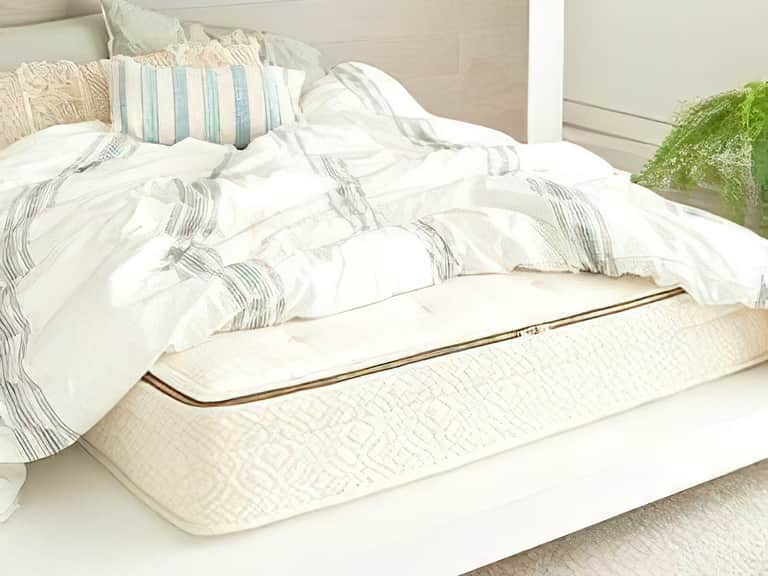
Material descriptions also need context. A “wool-filled” pad, for example, may contain a blend rather than wool alone. One available example, the Washable Wool Filled Mattress Pad, specifies a fill of 85% NATIVA wool from Uruguay and 15% plant-based batting, with a 100% organic cotton shell. Those details give readers more to work with than a fiber name by itself. They still do not answer every question: shoppers should also check fit, care instructions, certifications, and whether the construction suits their needs.
Construction details reveal how the item may behave
Two products made from the same headline material can feel and function differently. Construction determines how filling is held in place, how a pad sits on a mattress, and how well the item may suit a particular bed setup. Useful details include quilting or stitching, fill weight, pocket depth, fastening method, and whether the design is fitted, flat, or secured with corner straps.
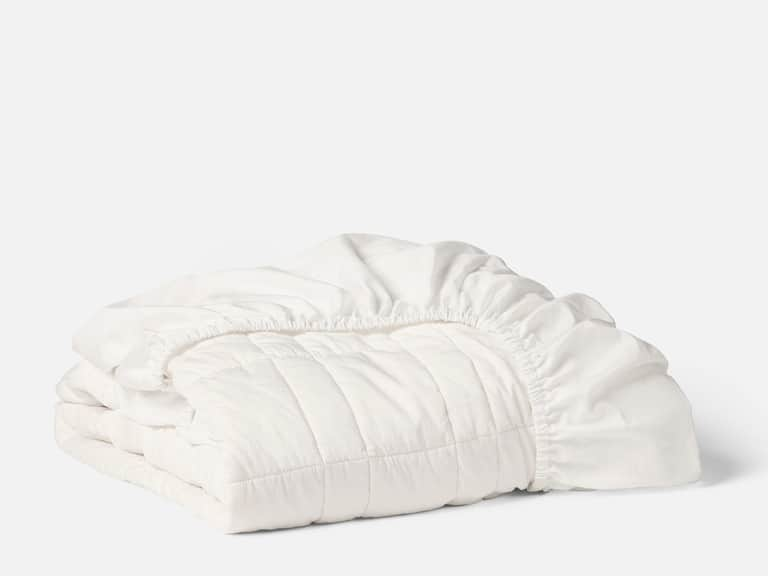
For fitted products, compare the stated pocket depth with the depth of your mattress. Remember to account for any existing topper or other layers. A pad that is too shallow may pull loose; one that is excessively deep may not sit smoothly. If you have an adjustable bed, split mattress, unusually thick mattress, or nonstandard size, check compatibility rather than assuming a familiar name guarantees a fit.
Ask how the filling is distributed and retained. Quilting or channel stitching can help prevent fill from shifting, but the pattern and density vary. A manufacturer may provide details about the construction; if not, close reading of the care instructions can offer clues about how delicate the item is and how much maintenance it may need.
Also distinguish comfort claims from measurable features. “Plush” is a subjective description. A stated thickness, fill composition, or pocket dimension is more concrete, although it still may not predict exactly how the bedding will feel to you. Where possible, review the return policy and warranty before buying, especially when the item is a substantial investment.
Understand what bedding certifications cover
Certifications can help make claims more specific, but a logo is not a universal stamp of approval for every quality a shopper might care about. A certification has a scope: it may relate to organic fiber, chemical testing, a factory, a particular component, or a defined stage of production. The key question is not simply “Is it certified?” but “What exactly is certified, by whom, and for which part of this product?”
For any claim, look for the name of the certifying organization and a way to confirm the status, such as a certificate number, searchable listing, or clear documentation. Read the wording carefully. A certified cotton shell does not necessarily mean every component of a finished pad is certified. A product-level certification may have a different scope from a certification that applies only to raw fiber or a facility.
A few sensible certification checks
- Organic claims: Check whether the certification applies to the fiber, the finished textile, or the broader processing chain. Confirm which component is covered if a product combines several materials.
- Textile safety claims: Find out whether testing relates to harmful substances in the tested article, a component, or a manufacturing process. Testing standards can differ in scope and purpose.
- Environmental claims: Ask what is being measured. A claim about responsibly sourced material does not automatically establish that the full product has a low environmental impact.
- Factory or labor claims: Look for specifics about the facilities and standards involved, rather than assuming that a product-material certification also verifies working conditions.
Terms such as “chemical-free,” “non-toxic,” and “eco-friendly” can sound reassuring while remaining too broad to evaluate on their own. No textile is literally free of chemicals, and a certification does not necessarily certify comfort, durability, allergy safety, or suitability for every sleeper. Treat certifications as useful pieces of evidence—not as a substitute for reading the material list and understanding the product.
Care instructions are part of the value
Before comparing prices, check how the bedding should be cleaned. A product that requires hand washing, line drying, or professional care may be a poor fit for a household that needs frequent, convenient laundering. Conversely, a washable item still needs the right conditions: high heat, bleach, or fabric softener may damage certain fabrics, elastic, fills, or waterproof layers.
Good care guidance should tell you whether the product can be machine washed, what temperature or cycle to use, whether tumble drying is allowed, and which cleaning products to avoid. Look for instructions for the actual product, not only general brand advice. If the label says “spot clean only” or “dry clean,” take that requirement seriously; assuming that an item can go in a home washer may cause shrinkage or damage.
Care also matters for households with allergies, pets, young children, or frequent spills. Consider how often you expect to wash the pad, whether it will fit in your machine, and how long it takes to dry. A waterproof layer may help guard against liquids, but it does not eliminate the need to launder bedding according to its instructions. For a zipped encasement or protector, find out whether the entire item is washable and how it should be dried.
A responsible manufacturer makes care instructions easy to find before purchase. If there is no guidance—or if instructions conflict between the product page and the sewn-in label—ask the company to clarify. Keep the answer and the care label for reference.
Evaluate the manufacturer’s transparency
Clear product information is a sign that a company has thought about what shoppers need to know. It does not guarantee a perfect product, but it helps you make a more informed decision. Look for a consistent description across the product page, label, and customer-service materials. When details differ, the manufacturer should be able to explain why.
Useful company information may include where materials are sourced, where a product is assembled, how components are identified, and how to contact customer support. “Made in” statements can refer to different stages, so avoid assuming that a product’s origin label tells the whole story of its supply chain. A manufacturer that distinguishes sourcing from assembly is offering a more precise account.
Pay attention to how the company handles questions. You can ask for fiber percentages, certification scope, mattress-depth measurements, washing guidance, or warranty terms. A helpful answer should be specific and consistent—not a repeat of promotional language. If a company cannot answer a straightforward question, that is useful information in itself.
Look at warranty exclusions and return conditions before committing. Some warranties cover manufacturing defects but not normal wear, misuse, stains, or damage from incorrect washing. A warranty is not a promise that a product will last forever; it is a set of conditions that deserves a quick read before the bedding arrives.
A practical side-by-side comparison
When several options seem similar, make a small comparison sheet. This turns a page of polished product language into a set of facts you can weigh against your priorities. Avoid scoring a company on claims that are too vague to verify. Instead, record what is stated clearly and flag what you still need to ask.
| What to compare | Questions to ask |
|---|---|
| Materials | Are the cover, fill, skirt, and waterproof layer identified separately? Are percentages provided? |
| Construction and fit | What are the dimensions, pocket depth, attachment style, and mattress compatibility? |
| Certifications | Which organization issued the certification, and which materials or production stages are covered? |
| Care | Can it be machine washed? What cycle, detergent, and drying method are recommended? |
| Company policies | What does the warranty cover? What are the return conditions and available support channels? |
The right choice depends on what you value most. Someone focused on easy washing may prioritize clear machine-care instructions. A hot sleeper may investigate fabric, fill, and waterproof construction without assuming that a “cooling” label guarantees a particular sensation. A shopper seeking certified organic textiles may want documentation for the exact components they care about. There is no need to pay for features that do not matter to your household.
Common warning signs—and how to respond
Not every short product page signals a problem, and polished branding is not proof of quality. Still, some gaps should prompt follow-up. Be cautious when a listing does not identify the fill, makes sweeping health or safety claims without supporting detail, uses certification logos without naming their scope, or leaves care instructions out entirely.
Vague country-of-origin language, contradictory fiber descriptions, and a warranty that is difficult to locate are also reasons to pause. Ask for clarification before purchasing. If the company’s response is clear and documented, the missing information may simply have been an oversight. If the response avoids the question, consider whether you are comfortable buying without the answer.
Reviews can add perspective on fit, noise, durability, and customer service, but they are individual experiences—not laboratory tests. Read a range of feedback and look for recurring, specific observations. A review that explains the mattress depth, wash routine, or how long the pad has been used is generally more informative than a one-line declaration that a product is perfect.
The bottom line: choose clarity over slogans
Evaluating bedding manufacturers does not require specialist knowledge. It requires a few good questions and the patience to look beyond the first line of a product description. Identify what the item is designed to do. Confirm the materials and construction. Check whether certifications apply to the components you care about. Read the care instructions, then make sure the fit and maintenance suit your bed and your routine.
The most useful manufacturer is not necessarily the one with the most impressive-sounding language. It is the one that gives you enough clear, verifiable information to decide whether a product belongs in your sleep environment. A transparent label cannot promise a perfect night, but it can help you choose bedding with fewer surprises—and care for it with more confidence.